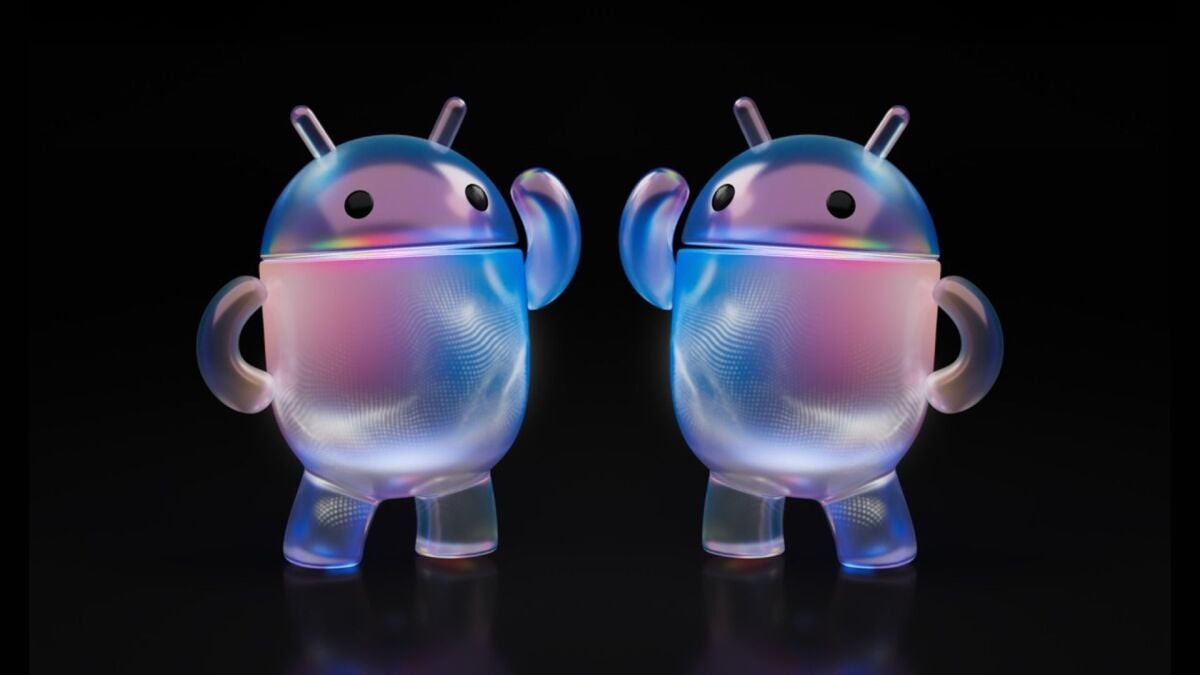
Google I/O 2026 takes place on May 19, but today, Google hosted a livestreamed warm-up event called The Android Show: I/O Edition. As you might have guessed, it’s mostly focused on Android news.
In the past, Google I/O was focused on new Android developments. Now, Google gets that stuff out of the way a week in advance, clearing the decks for Gemini and artificial intelligence to take center stage at I/O.
Much of what was shared at The Android Show was fairly small and incremental, but between a new Google laptop brand and some useful-sounding Gemini features, there’s some meat to chew on here. So, let’s dig into everything we learned at The Android Show.
Mashable 101 Fan Fave: Vote for your favorite creator today!
The Android Show: I/O Edition’s biggest announcements
Here’s what stood out the most from The Android Show.
Meet the Googlebook
Here it is.
Credit: Google
Certainly, the biggest announcement of the show was Googlebook, a new class of laptops from Google and its hardware partners, including Asus, Dell, HP, Lenovo, and Acer. We got only the briefest glimpse of the hardware itself, and Google opted not to share release windows or price points at The Android Show. At its core, Googlebook seems like Chromebook for the Gemini generation.
Google’s big innovation with Googlebook is Magic Pointer, a new AI-powered mouse cursor. If you hover over something with Magic Pointer on a Googlebook, it’ll suggest contextual AI actions for whatever you’re pointing at. One example Google gave was the ability to hover over a date in an email and set up a meeting. You know, stuff you normally do with AI, but now built into your mouse cursor.

‘Googlebook’ rolls right off the tongue.
Credit: Google

Credit: Google
Google announces the Googlebook, a new breed of built-for-Gemini laptops
Another neat feature is the ability to use apps installed on your Android phone right from the Googlebook itself. According to Google, this won’t require any extra downloads or bad touchscreen controls, like Android apps on Chromebooks sometimes have in the past. That’s nice.
Design-wise, the Googlebook will have a thin “Glowbar” on the back cover, which will light up with Google’s logo colors.
Android Auto gets some improvements

Looks good!
Credit: Google
If you have a modern car that’s Android Auto-compatible, Google has built some swanky improvements into the experience for you. For starters, the Material 3 Expressive design language from your Pixel phone can now carry over to Android Auto, bringing your personalized color scheme and font choices with it, if you so choose. Users can also set custom widgets on the display to check the weather or open the garage door.
Mashable Light Speed
Beyond that, Google has updated Google Maps within Android Auto to give it a more three-dimensional view of the area around you. It can even tell which lane you’re in, which could be handy. Google has also added full HD, 60 frames per second video support via YouTube to supported vehicles. Like other cars with video functionality, this only works while parked. Videos will automatically transition to audio-only once the car is set to drive.
Lastly, Google has brought some helpful contextual Gemini features to Android Auto. You can use voice commands to order food through DoorDash, use the Magic Cue feature from recent Pixel phones to draw in relevant information when someone asks you a question via text message, and more.
Gemini Intelligence comes to Android
Over the course of the rest of 2026, Google will roll out some new “Gemini Intelligence” features, which are meant for “the latest Samsung Galaxy and Google Pixel” devices coming this summer. Other devices, like cars, watches, laptops, and smart glasses will also get these features as the year rolls on.
Gemini Intelligence features largely seem to streamline things you could already sort of do with AI, giving the AI even more power to automate multi-step tasks and understand context. For instance, you can use Gemini Intelligence to automatically find a good spot in an upcoming spin class or find a tour on Expedia based simply on a photo of a travel brochure you showed the AI agent.
Other nuggets include Rambler, a new speech-to-text tool that removes filler words like “um” and “like” from your prompt. Google says it can even handle switching languages mid-sentence. This should allow users to speak more conversationally when talking to Gemini. Another new feature is the ability to have Gemini automatically fill out long forms for the user on mobile.
Last but not least for Gemini Intelligence is the ability to build custom widgets using Create My Widget. Google claims you can use natural language voice prompts to have Gemini build a custom on-screen widget with the information you want. This will be fascinating to test out as new Pixel devices roll out this summer.
Pause Point gives you time to reflect

Take a pause.
Credit: Google
One small but potentially meaningful new Android feature is Pause Point. How this works is that you mark apps that you find yourself using too much as distracting, and when you try to open them, Pause Point will stop you for 10 seconds. During that time, you can reconsider opening the app, and Pause Point will even suggest other, more productive apps you could open instead. This should automatically be turned on for all social media apps.
New tools for creators
Later this year, Pixel devices will get a new creator-focused feature called Screen Reactions. It records your face and what’s on your screen, so you can react to whatever you’re looking at without having to do any video editing at all. Instagram is also adding features exclusive to new Android devices. You can capture and play back content in Ultra HDR, and videos have built-in stabilization tools now, too.
The Instagram Edits app for Android is also getting a boost. You can use AI to automatically upscale content and use sound separation tools to weed out any unwanted background noises from your videos. Last but not least for creators, Adobe Premiere is coming to Android later this year, complete with exclusive templates for YouTube Shorts.
Chrome for Android gets a boost
Finally, Google is adding some more Gemini support to the Chrome app for Android mobile devices. This includes Nano Banana support built right into the browser for image generation, so if you’re studying for an exam and you want to turn a page you’re reading into a more visually appealing infographic, you can do that, at least in theory.
Google says you can also use SpotHero to automatically find a parking spot based on a ticket for a show you’ve bought, and use the Gemini icon in the upper right corner of a webpage to summarize the page.
Want to learn more about getting the best out of your tech? Sign up for Mashable’s Top Stories and Deals newsletters today.
UPDATE: May. 12, 2026, 2:26 p.m. EDT This article has been updated with additional news from The Android Show event.
PakarPBN
A Private Blog Network (PBN) is a collection of websites that are controlled by a single individual or organization and used primarily to build backlinks to a “money site” in order to influence its ranking in search engines such as Google. The core idea behind a PBN is based on the importance of backlinks in Google’s ranking algorithm. Since Google views backlinks as signals of authority and trust, some website owners attempt to artificially create these signals through a controlled network of sites.
In a typical PBN setup, the owner acquires expired or aged domains that already have existing authority, backlinks, and history. These domains are rebuilt with new content and hosted separately, often using different IP addresses, hosting providers, themes, and ownership details to make them appear unrelated. Within the content published on these sites, links are strategically placed that point to the main website the owner wants to rank higher. By doing this, the owner attempts to pass link equity (also known as “link juice”) from the PBN sites to the target website.
The purpose of a PBN is to give the impression that the target website is naturally earning links from multiple independent sources. If done effectively, this can temporarily improve keyword rankings, increase organic visibility, and drive more traffic from search results.