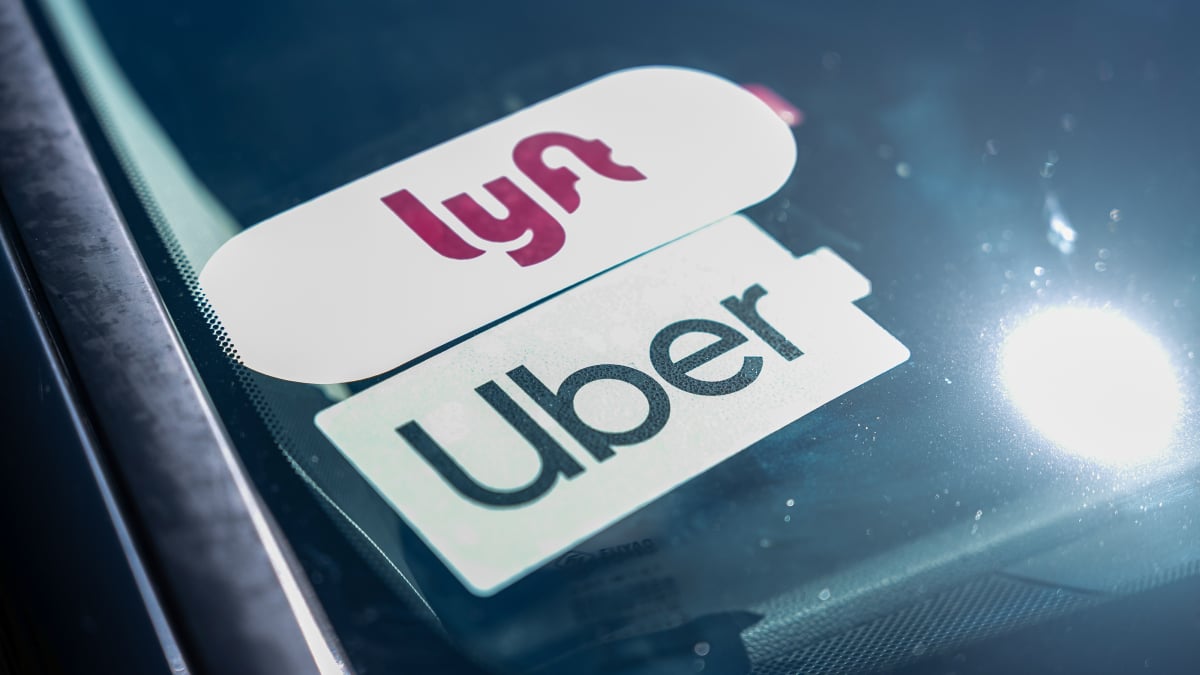
Flock Safety, the company behind a nationwide network of automatic license plate readers, pitched a plan to convert hundreds of thousands of Uber, Lyft, and delivery drivers into a mobile extension of its surveillance system, according to a company presentation obtained by 404 Media.
404’s Joseph Cox wrote that the document describes equipping driver vehicles with dashcams capable of scanning license plates along their routes, effectively expanding Flock’s network beyond its usual fixed cameras mounted on poles.
Someone stole every Flock camera in this Minnesota city
The presentation centers on a proposed partnership with Nexar, a dashcam maker whose devices are already marketed to rideshare drivers and commuters. Cox reported that 404 Media had previously uncovered the planned partnership last year through separate sourcing, and that this newly obtained document shows Flock was actively marketing the arrangement to prospective customers around that same period.
Mashable Light Speed
The material was shared with 404 Media by a Georgia resident who obtained it through a public records request, after Flock presented it to that state’s attorney general’s office.
Flock told 404 Media the Nexar deal was never actually put into place. Still, according to Cox’s reporting, the presentation demonstrates the scale of the company’s ambitions, citing plans to draw on roughly 350,000 Uber, Lyft, and other delivery devices for the network, in addition to existing coverage from businesses and homeowners’ associations across Georgia. It remains unclear, Cox noted, whether Uber, Lyft, or their drivers would have known their vehicles were collecting this data.
The report situates the proposal within Flock’s broader push into new data sources. Earlier, 404 Media reported on a security breach that exposed a large trove of Nexar customer footage, including footage near sensitive military sites, as well as a separate effort — later abandoned — to build a tool to link license plates to specific individuals using leaked information. Cox also cited the outlet’s coverage of a similar arrangement involving BusPatrol, a company that outfits school buses with cameras and shares resulting data with police.
Uber, Lyft, and Nexar did not respond to 404 Media’s requests for comment, according to Cox’s reporting.
PakarPBN
A Private Blog Network (PBN) is a collection of websites that are controlled by a single individual or organization and used primarily to build backlinks to a “money site” in order to influence its ranking in search engines such as Google. The core idea behind a PBN is based on the importance of backlinks in Google’s ranking algorithm. Since Google views backlinks as signals of authority and trust, some website owners attempt to artificially create these signals through a controlled network of sites.
In a typical PBN setup, the owner acquires expired or aged domains that already have existing authority, backlinks, and history. These domains are rebuilt with new content and hosted separately, often using different IP addresses, hosting providers, themes, and ownership details to make them appear unrelated. Within the content published on these sites, links are strategically placed that point to the main website the owner wants to rank higher. By doing this, the owner attempts to pass link equity (also known as “link juice”) from the PBN sites to the target website.
The purpose of a PBN is to give the impression that the target website is naturally earning links from multiple independent sources. If done effectively, this can temporarily improve keyword rankings, increase organic visibility, and drive more traffic from search results.